News and playbooks from the front line.
What's working right now in outbound, search and paid social — plus updates from inside the agency.

EliseAI’s $4B valuation points to a bigger healthcare AI question: what can actually be deployed?
EliseAI’s latest funding news lands alongside a healthcare product story built around workflow automation, integrations and specialty use cases. The company’s own positioning suggests investors are seeing more than a chatbot: they are backing software designed to fit into patient communications, scheduling, billing and record updates.

Why healthcare purchasing is starting to look more like enterprise partnership buying
A clinician-led employer alliance may point to a bigger shift in how healthcare buyers think about direct relationships. The evidence here does not prove direct contracting is surging, but it does show a move toward evaluating partners on integration, operational burden and broader value — not just price or point solutions.

HealthPartners and Essentia point to a broader Upper Midwest integration play
The proposed combination looks less like a technology or procurement story than a regional consolidation move. The available evidence points to a larger integrated care and coverage platform, with employer-facing offerings and service-line depth already visible in HealthPartners’ own reporting.

Telehealth’s growth story may be less about product design than provider regulation
The evidence here does not prove that embedded telehealth will beat standalone models. What it does show is that healthcare expansion and cooperation can run through state approval processes, a reminder that telehealth strategies built around provider partnerships must account for regulation as well as demand.

Why some medtech companies are folding training into commercialization
ZimVie’s investor materials show medical education, direct sales coverage and digital workflow adoption being treated as part of one commercial system. The lesson for medtech leaders is less about education as a standalone service and more about where training sits inside the go-to-market engine.

SCAN’s Oregon deal shows senior living may be becoming a Medicare access channel
A partnership with The Springs Living puts SCAN in front of older adults through a senior living operator, but the commercial model remains partially under wraps while CMS approvals are pending.

Why clinical AI’s global rollout may depend on partnerships, not just products
The OpenEvidence story points to a broader reality in healthcare AI: in lower-resource and more diverse health systems, distribution is often less about shipping software and more about local fit, data access, training and implementation support.

Thatch’s unicorn round points to a bigger bet on benefits infrastructure
The company’s story is not just about employee choice in health benefits. It is also about the unglamorous work of payroll syncing, enrollment, reimbursement and broker support — the operational layers that can make an ICHRA model easier to run.
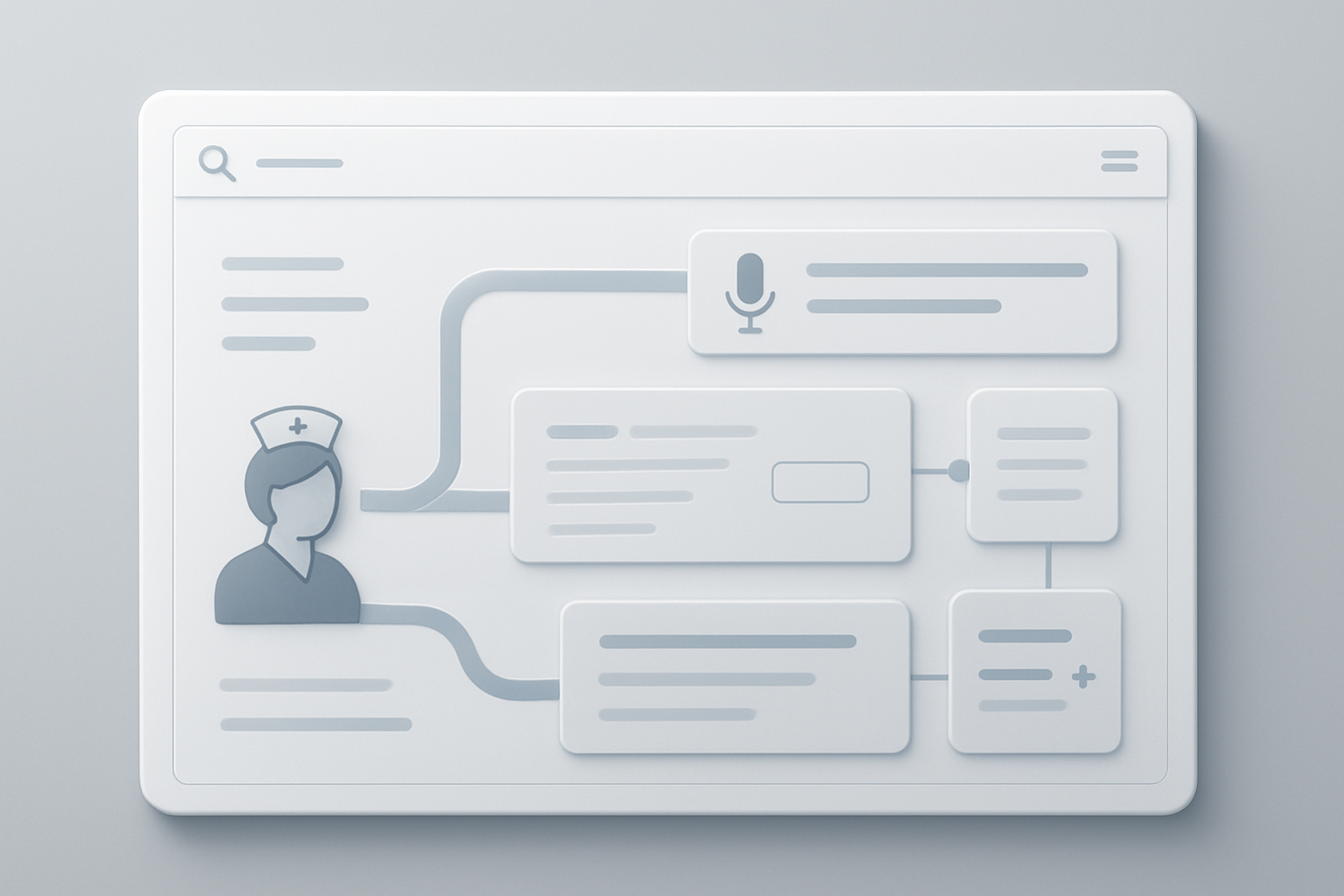
Oracle’s nursing AI push shows where healthcare EHR monetization is heading: inside the workflow
Oracle Health has extended its Clinical AI Agent from physicians to inpatient nurses, packaging voice navigation, summaries and discrete charting directly inside the EHR. The move underscores a commercial bet that embedded workflow AI — not standalone tools — is where adoption friction is lowest.

HIPAA-Compliant Marketing Infrastructure Is Turning Into a Growth Category in Healthcare
As OCR keeps tracking technologies under a tighter HIPAA lens, healthcare marketers still need attribution, audience building and measurement. That gap is creating room for vendors like Ours Privacy to position compliance not as a brake on growth, but as the infrastructure that makes growth possible.
Want these insights applied to your pipeline?
Book a strategy call and we'll tell you which channel to fix first.
Book Your Strategy Call