Oracle’s nursing AI push shows where healthcare EHR monetization is heading: inside the workflow
Oracle Health has extended its Clinical AI Agent from physicians to inpatient nurses, packaging voice navigation, summaries and discrete charting directly inside the EHR. The move underscores a commercial bet that embedded workflow AI — not standalone tools — is where adoption friction is lowest.
Key takeaway
Oracle’s nursing AI launch is less a standalone product story than a sign of how EHR vendors are trying to commercialize AI: by embedding it directly into clinical workflows where documentation burden is already acute.
Oracle is extending the same playbook from doctors to nurses
Oracle Health has expanded its Clinical AI Agent to inpatient nurses in the U.S., adding another clinical user group to a product strategy built around documentation support inside the EHR.
The key detail is where the AI sits. Oracle says the tool is embedded in Oracle Health Foundation EHR, rather than offered as a separate application. That matters commercially because it puts the AI in the path of everyday charting and care coordination work, where health systems are more likely to evaluate it as part of existing software spend and workflow design.
The company’s nursing launch follows an earlier physician-focused documentation effort. Oracle says its prior clinical note AI capabilities have saved physicians more than 400,000 hours across U.S. health organizations, and it is now extending those capabilities into nursing documentation and care coordination. That figure is Oracle’s own claim, not independently verified in the material provided, but it shows how the company is framing the product line: as a broader documentation automation layer, not a one-off feature.
What Oracle says the nursing agent does
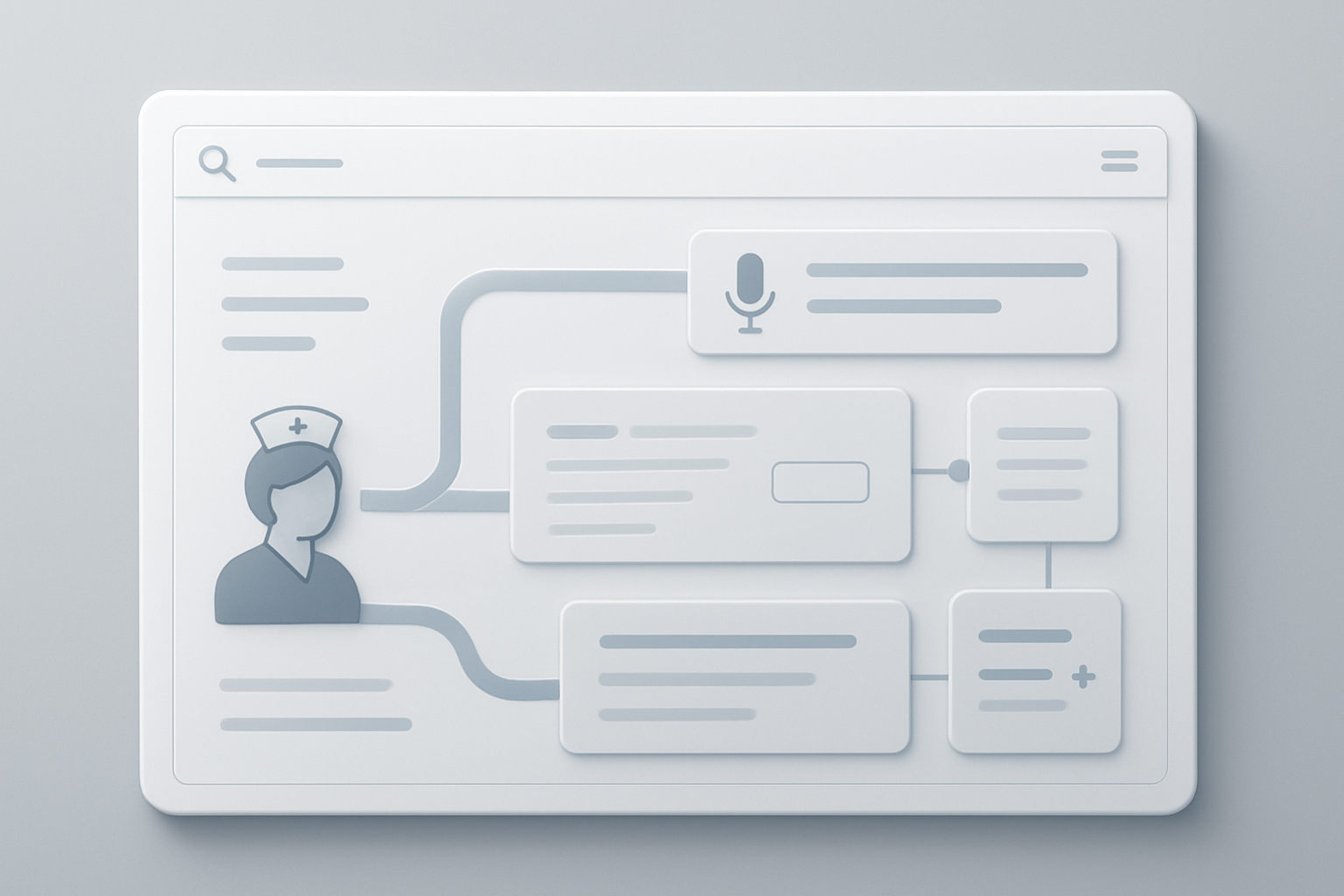
Oracle’s description of the nursing release centers on a few practical workflow functions: voice-driven chart navigation and search, AI-powered acute nursing summaries, and voice-enabled discrete charting.
According to the company, the aim is to help nurses find patient information, document care in near real time, and spend more time with patients. On the product page, Oracle also says the solution can help nurses capture discrete data quickly, reduce administrative tasks, support patient interactions and free up time for direct care.
Those are familiar promises in health IT, but the implementation detail is what makes this launch commercially relevant. Embedded workflow tools tend to be easier to position than standalone generative AI products because they are tied to a named clinical job to be done: charting, searching, summarizing and coordinating care at the point of care.
That does not prove the product works at scale. It does suggest Oracle is selling the value of AI through workflow convenience rather than through a separate AI category buyers have to adopt on its own.
Why the EHR location matters more than the model name
For healthcare software buyers, the biggest barrier to AI adoption is often not enthusiasm but friction. New systems create training burden, integration work and extra clicks. Oracle’s approach tries to avoid that by inserting AI into the EHR environment clinicians already use.
That is the commercial story here. The company says the Clinical AI Agent is designed to support clinicians, staff and operations by drafting documentation, automating coding and scheduling, coordinating workflows and connecting clinical and financial data. In other words, the product is being positioned as part of a broader operating layer rather than a discrete AI assistant sitting off to the side.
For EHR vendors, that approach can be more defensible than selling generic AI features as standalone products. It anchors the proposition in existing clinical workflows and gives sales teams a more concrete message: reduce documentation burden, improve navigation and support care coordination without forcing users into another system.
But the evidence in this case supports only Oracle’s strategy, not a broader market conclusion. The launch shows one vendor leaning into embedded workflow AI. It does not prove that every healthcare buyer prefers that route, or that standalone AI products cannot work in other settings.
BayCare’s comment signals relevance, not proof of scale
Oracle included a customer quote from BayCare Health System CIO Lynnette Clinton, who said the company has listened to feedback to help ensure the nursing capabilities fit naturally into the flow of care.
That is useful as a signal of implementation relevance. It suggests the product is being discussed in terms of workflow fit, which is exactly where an EHR-native AI tool needs to land.
Still, it is a vendor-supplied quote, and the material provided does not include independent implementation details, measured outcomes or evidence of broad adoption. So it should be read as a customer endorsement of product direction, not proof of effectiveness.
That distinction matters for commercial readers. In healthcare technology, a strong customer quote can support messaging, but it is not the same as validated ROI. The difference between “sounds useful” and “drives measurable impact” is often where buying decisions get stuck.
What this says about Oracle’s platform strategy
Viewed together, the physician and nursing launches point to a broader pattern: Oracle appears to be packaging AI as documentation automation across multiple clinical roles, with the EHR as the delivery point.
That approach has a few advantages from a go-to-market perspective. It creates a common story for multiple buyer groups, keeps the product tied to core clinical workflows, and allows the company to extend a familiar platform narrative rather than pitching isolated features. It also gives Oracle a way to talk about value in terms buyers already understand: less documentation burden, smoother charting and better care coordination.
The limits are just as important. The available evidence does not show pricing, packaging, distribution strategy, or independently measured outcomes for nurses. Oracle also says the product page reflects general direction only and is not a commitment to deliver any material, code or functionality. So while the launch is commercially meaningful, it should not be read as a finished proof point.
For health systems, the practical takeaway is narrower and more immediate: embedded AI may be easier to evaluate when it is tied to a concrete workflow, especially in documentation-heavy roles like nursing. For vendors, the lesson is similar. In this market, AI may be most persuasive when it behaves less like a headline feature and more like part of the EHR itself.
The real test will be whether workflow convenience turns into buying behavior
Oracle’s nursing launch is interesting because it shows where enterprise healthcare software vendors think the market is headed: not toward standalone AI tools, but toward AI features folded into the systems clinicians already use.
That does not settle whether this model will win. It does, however, clarify the commercial logic. In healthcare, adoption often follows workflow fit before it follows novelty. Oracle is betting that nursing AI will be easier to sell — and easier to use — when it lives inside the charting environment rather than outside it.